
Science & discoveries / Early trial · 1 patient
Insulin-producing cells: what one case in China showed
One year of follow-up after an experimental islet-cell transplant.
Key takeaway
Insulin independence in one case does not yet establish a solution for everyone with type 1 diabetes.
What was studied
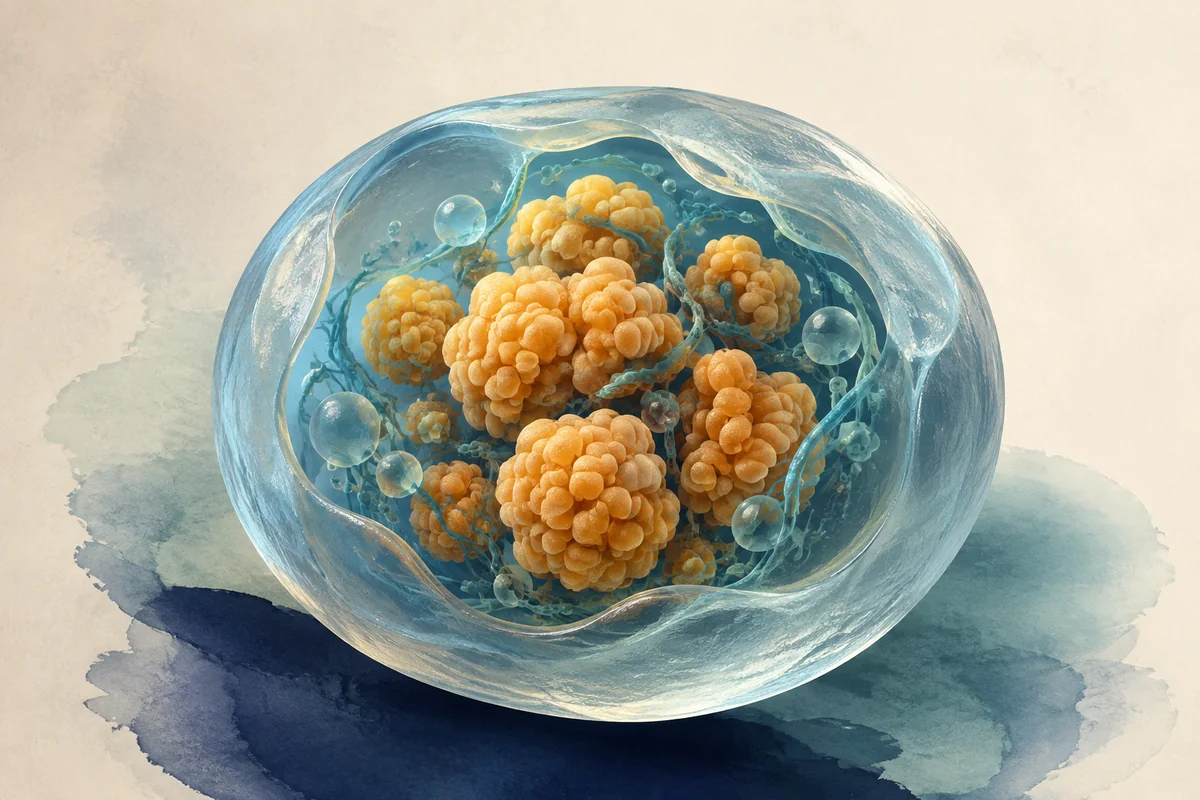
The paper reports the preliminary analysis of one patient in a phase 1 trial. Her cells were chemically reprogrammed and developed into insulin-producing islets before transplantation into the abdominal wall region.
What was found
The patient achieved sustained insulin independence from day 75. During one-year follow-up, time with glucose in the target range and HbA1c improved; no transplant-related abnormalities were reported.
What it does not prove
This is a single-patient result without a comparison group in the preliminary report. One year does not establish long-term safety, cell durability or applicability to others. The authors call for further clinical studies.
Why it matters
The advance matters because it seeks to replace lost cellular function. It must be distinguished from a report of a general cure or an already routine treatment.
Sources
- Transplantation of chemically induced pluripotent stem-cell-derived islets under abdominal anterior rectus sheath in a type 1 diabetes patient ↗Cell · Wang and colleagues · Accessed 5 September 2026
An editorial explanation referring to the listed sources. General information; individual interpretation and treatment require clinical assessment.
Updated 5 September 2026. How we prepare our content